What Documents Do You Need to Sell a House in Oregon?
To sell a house in Oregon you do not need a stack of paperwork in a binder, but you do need to know where your documents live and which ones matter. The essentials are your recorded deed, a clean title history, the Seller's Property Disclosure Statement, and any records tied to the property itself, like surveys, permits, and well or septic paperwork. Here is the practical checklist I walk sellers through across Jackson and Josephine Counties, from Medford and Grants Pass to Eagle Point, Jacksonville, and the rural stretches in between.

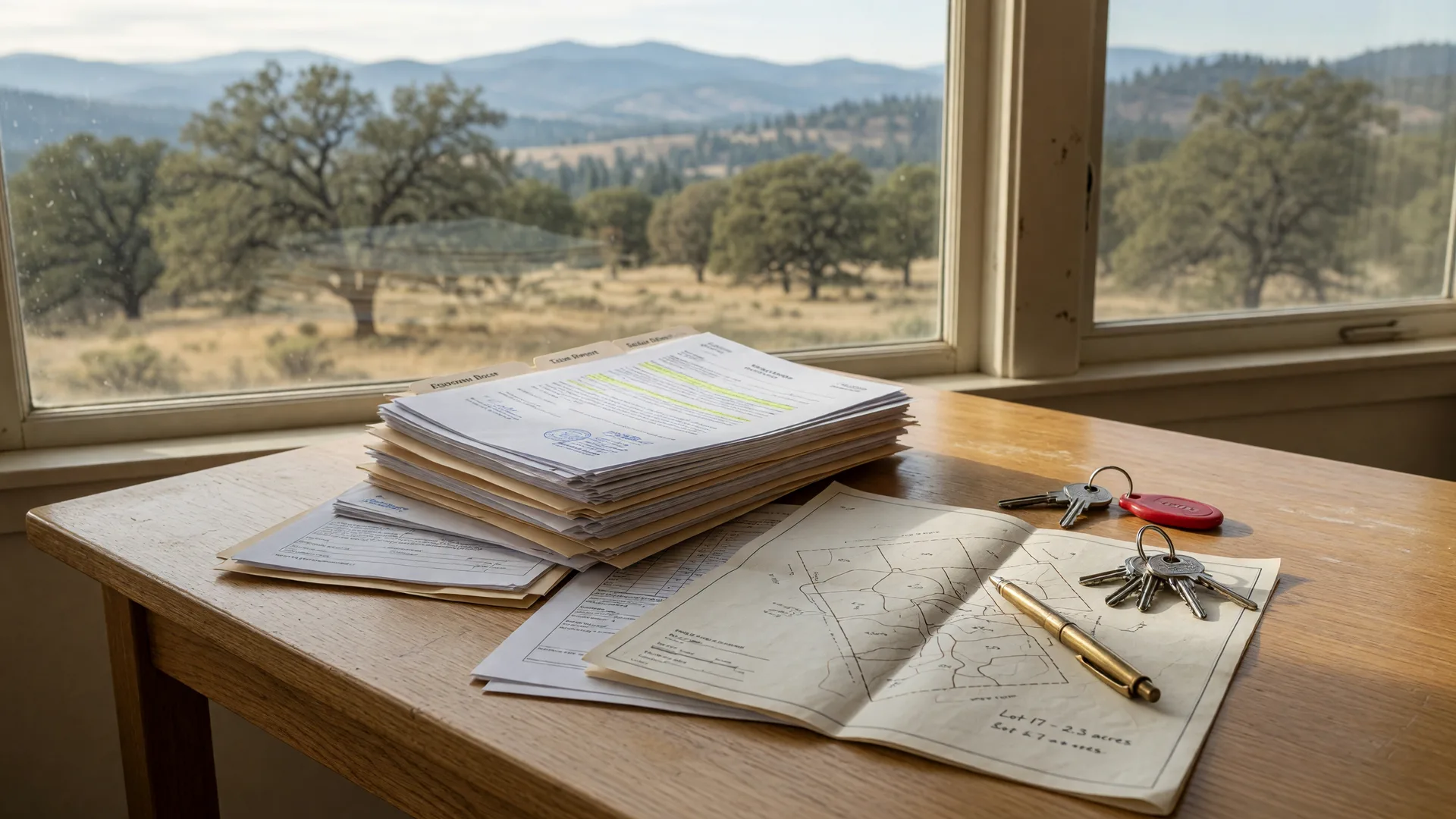
Here is the short answer to the question most sellers start with: you rarely need to produce the deed itself to sell your house. The deed is already recorded in the public record, and the title company pulling the history for your sale will work from that public record. What you actually need is to know what documents exist about your property, so you can provide the ones buyers, lenders, and the law will ask for, and track down any that are missing before they become a problem.
Some of this is legally required in Oregon, and some of it is simply what makes a sale feel smooth instead of stressful. Either way, gathering it early, before the first showing, is the move that separates an easy closing from one full of surprises.
Start With the Deed and Proof of Ownership
Your deed is the document that shows you own the property. It was recorded with the county when you bought the home, so a copy lives in the public record even if you have never seen the original. In Jackson County, deeds and other real property records are recorded by the County Clerk's Recording Office in Medford, and in Josephine County by the County Clerk and Recorder's Recording Division in Grants Pass. Both counties offer online record search, often called a "digital research room," where you can look up and download copies of your recorded deed for free.
You do not need the original deed in hand to list your home. What matters is that the title history is clean and that the name on the current deed, or the trust or estate that holds it, matches who is signing the sale. If you are selling a property you inherited or one held in a trust or estate, confirming who has the authority to sign comes before anything else. The answer center covers who can sign for an inherited property in practical detail, and the inherited property guide walks through the same ground step by step.
The Title Search Will Find the Rest
The title search is the backbone of every Oregon sale. A title company researches the recorded history of the property to confirm who owns it and to find anything that could cloud the title: unpaid liens, judgments, easements recorded against the property, or an old mortgage that was never properly released. The result is a title commitment that lists what must be satisfied before closing, and the title insurance policy that protects the buyer against problems that turn up later.
You do not prepare this yourself. Your listing agent and the escrow or title company coordinate it. What you can do is be ready to explain anything unusual that shows up, like a lien tied to a contractor, an easement for a shared driveway, or a parcel line that does not match the fence. The title company sorts most of this out, but a seller who understands their own property history makes the job much easier.
The Seller's Property Disclosure Statement
Under Oregon law (ORS 105.462 to 105.490), sellers of most residential property must complete and deliver a Seller's Property Disclosure Statement. The form asks about the condition of the home, its systems, water and sewage, and other known issues. The buyer gets a review window after receiving it, and what you write should be honest and complete. Known issues disclosed up front are manageable; issues that surface later make buyers wonder what else was left out.
The disclosure form is not a document you "gather," it is one you prepare with care, and the full walkthrough of it, including what "unknown" means and the buyer's five-business-day review window, is in the article on what you must disclose when selling a home in Oregon.
Well, Septic, and Rural System Records
For rural Southern Oregon properties, which is a lot of what I list on acreage around Medford, Eagle Point, the outskirts of Grants Pass, and toward Rogue River, the well and septic paperwork often matters more than any other file in the sale.
Under Oregon's Domestic Well Testing Act (ORS 448.271), the well water must be tested by an accredited laboratory for total coliform, arsenic, and nitrates once a purchase offer is accepted. Well construction reports are filed with the Oregon Water Resources Department, which keeps a searchable well log database, so a missing well log is usually findable. Septic systems are regulated by the Oregon Department of Environmental Quality, and while neither Jackson nor Josephine County currently requires a septic inspection at sale, buyers commonly ask for one on acreage, so service and pumping records make a strong first impression.
If your property has a private well or septic, the dedicated article on selling a home with a well and septic in Southern Oregon covers the testing law, the document list, and what to do if a problem surfaces, and the rural property seller guide goes even deeper into water rights and access.
Surveys and Boundary Records
Oregon does not require a survey to sell a home, and many city properties sell on the strength of a clear title and an existing plat map with no new survey at all. A survey becomes worth having when boundaries are unclear, when fences sit in a different place than the records suggest, or when a buyer's lender asks for one. On acreage, where property lines can run along old fence rows and creek banks, an up-to-date survey settles questions that would otherwise surface during the buyer's due diligence. If you have one, keep it handy. If you do not, talk with your agent about whether your property is the kind that will need one.
Permits and Improvement Records
Buyers and their inspectors pay attention to improvements that were made without permits: a finished garage, a covered patio, an added bedroom, a shop on acreage. County building departments keep permit records that are searchable, and in Southern Oregon these records are most useful when they confirm that work was done right. If you completed renovations and kept the permits, certificates, or invoices, gather them. They answer the "was this done properly?" question before an inspector raises it. If a buyer's lender or the county flags an unpermitted improvement, that becomes a conversation about curing it or disclosing it, and your agent and the county can lay out the options.
HOA Documents, When They Apply
If your home sits in a community governed by a homeowners association, the sale comes with a second document set: the CC&Rs or declaration, the bylaws, and usually the current budget, meeting minutes, and a statement of what you owe. In Oregon, the buyer's review of these documents happens during their due diligence period, so having them collected and ready keeps the timeline moving. Your HOA or its management company will have them, and your listing agent can request the package on your behalf. Check whether the HOA requires a transfer fee or a certificate of no outstanding balance, so nothing stalls the week of closing.
Property Tax and Insurance Records
Property taxes are prorated between you and the buyer at closing, so the closing statement will need your current tax account details. In both Jackson and Josephine Counties, the assessor sets assessments and the county's tax office issues statements and collects payments, and both counties publish property search portals online where you can pull your parcel, assessed value, and tax history. None of this is hard to find, but it helps to know where it lives.
Your homeowners insurance policy is not transferred to the buyer with the house; they will secure their own coverage. What matters to you is that your policy stays in force through closing, and if you own property that sits vacant, insurance is one of the first things to review, because vacancy can change coverage. The article on home insurance in Southern Oregon covers the wildfire and FAIR Plan considerations that matter in this region.
Mortgage Payoff and Lien Information
If you still owe money on the property, your lender will provide a payoff statement for the escrow or title company, and the payoff is paid from your proceeds at closing. You do not need to hunt this down yourself; your lender has a process for it, and your escrow officer will request it. The same goes for any second mortgage, home equity line, or recorded lien: the title search finds them, and closing clears them. Just let your agent and escrow officer know what loans or liens exist so nothing is a surprise at the table.
Questions Southern Oregon Sellers Ask About Documents
Do I need the original deed to sell my house?
No. Your deed is already recorded in the public record, and the title company works from that record. What matters is that the current title history is clean and that the person or entity signing the sale is the legal owner. If you want a copy for your own file, both Jackson and Josephine County Clerks offer free online searches of recorded documents.
What if I cannot find my survey?
The county clerk's records often hold recorded surveys and plats, so a missing survey is frequently recoverable. If no recorded survey exists and your sale needs one, a licensed surveyor can prepare a new survey, and your agent can tell you whether your property is the kind buyers will ask about.
Who pays for the title search and title insurance?
The escrow or title company runs the search as part of the transaction, and the cost is itemized on the closing statement and settled as part of the negotiations in the purchase agreement. Every transaction differs, and the offer you accept determines who pays for what. Your agent will explain the line items before you sign anything.
What if the title search finds an old lien or an unreleased mortgage?
This is common, and it is exactly what the title search is for. An old lien can often be cleared with proof of payoff, a release recorded years ago, or a bit of chasing by the title company. Your escrow officer walks you through the specific path for whatever the search turns up.
Do I need a real estate attorney to sell my house in Oregon?
Oregon does not require you to hire an attorney for a routine home sale, and most Southern Oregon closings are coordinated by escrow and title companies. But if your situation has legal layers, like a dispute, a complex estate, or questions about your specific documents, an attorney is the right person to ask. It never hurts to have one review anything you are unsure about.
I live out of state. Do I need to send any of this paperwork by mail?
Almost none of it. Nearly every document in an Oregon sale is signed electronically, and your local broker coordinates the property side while the title and escrow company handles the closing. The answer center explains how selling without coming to Oregon works in plain terms, and the out-of-area selling guide covers the full process.
Gathering Documents Is Easier With a Plan
The honest truth is that most sellers are surprised by how little they have to produce themselves. The deed is in the public record, the title company does the research, and the disclosure form is prepared with care rather than pulled from a drawer. Your job is mostly to know what exists, gather what you have, and flag anything unusual early. After more than 30 years in real estate, I keep a checklist for every property I list, and it is built to catch the missing permit or the unrecorded easement before it becomes a negotiating point.
If you would like a clear picture of what your property will need, the selling page explains how I work, and the seller resources page organizes guides by situation, from inherited property to remote sales. Or simply reach out and tell me about your property; I will tell you honestly which documents matter for your sale and which ones we can find together.
Not Sure What Paperwork Your Sale Needs?
Tell me where the property is and what documents you have, and I will map out exactly what the sale will need, including the items we can find together. You will get a straight answer and a clear list.